Sinopsis Buku
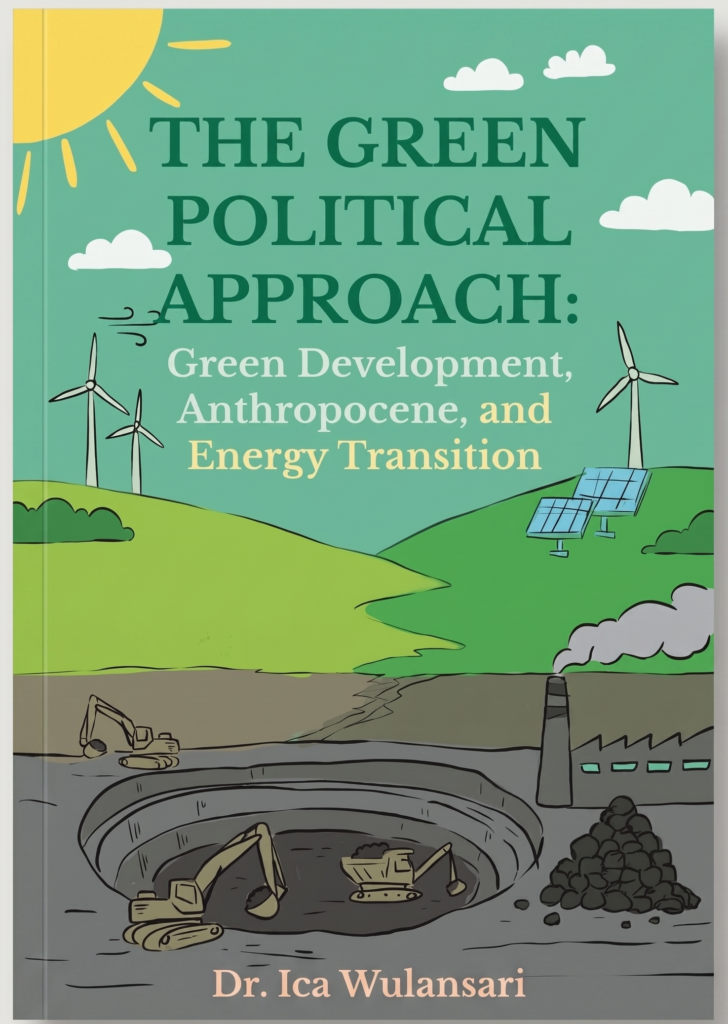
In an era defined by climate breakdown, resource conflict, and deepening inequality, The Green Political Approach offers a sharp, critical introduction to the environmental politics shaping our world and the power structures that threaten to undermine it.
Written for students, activists, and policymakers alike—particularly Generation Z readers seeking clarity without jargon—this textbook unpacks the hidden political economies behind green development, energy transitions, and the Anthropocene. It guides readers through the promises and perils of today’s most urgent environmental agendas.
Why has the Green New Deal failed to deliver genuine justice? Who really controls the technology driving the energy transition? And what happens when “green growth” becomes a cover for continued exploitation? This book does not shy away from uncomfortable answers. From the EU’s climate diplomacy to Indonesia’s nickel-driven energy pivot under Chinese investment, the book exposes how capitalist logic, neoliberal institutions, and state-market alliances reproduce colonial patterns—even as nations pledge net-zero futures.
The book introduces key concepts that every environmental thinker needs: ecological modernization, greenwashing, climate capitalism, the Capitalocene, and critical minerals. It also addresses the human face of the crisis—climate refugees, urban disasters in Jakarta and Dhaka, and the intersectional vulnerabilities too often ignored by technocratic elites. Through case studies and accessible theory, The Green Political Approach challenges readers to ask who wins, who loses, and what a truly just transition might require.
Above all, this book is a call to see environmental politics clearly—as a battlefield of power, not just a technical problem. Concise, urgent, and deeply informed by Global South perspectives, it is essential reading for anyone ready to move beyond slogans and confront the real politics of survival on a damaged planet.